Category Archives: Music

Blue Bros

The Blues Brothers is a 1980 film directed by John Landis.
It stars John Belushi as “Joliet” Jake Blues and Dan Aykroyd as his brother Elwood, characters developed from the recurring musical sketch “The Blues Brothers” on
Saturday Night Live.

The script is set in and around Chicago, Illinois, where it was filmed, and the screenplay is by Aykroyd and Landis. It features musical numbers by singers James Brown, Cab Calloway, Aretha Franklin, Ray Charles and John Lee Hooker. It features non-musical supporting performances by Carrie Fisher and Henry Gibson.

And seen with Elizabeth, this 133-minute film turns into a 278- minute (over 4 hours) marathon.

In retrospect, this film does have pacing issues. A more modern re-telling would cut all those long, drawn-out shots and bring it in under two hours.

But the musical numbers can stay. They hold up and are as fantastic as they were back in 1980.

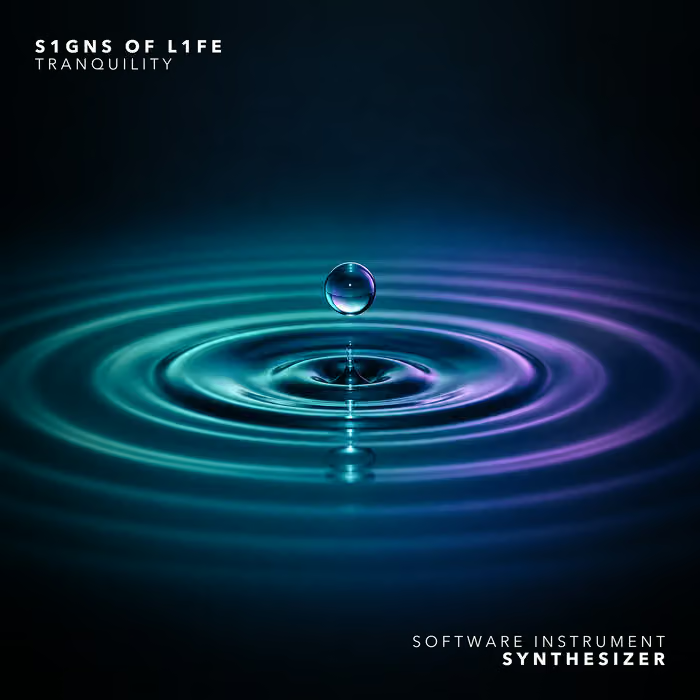
Tranquility

Chris Bryant of S1gns Of L1fe has released TRANQUILITY his most ambitious instrument yet. Designed for evolving atmospheres, expressive harmony, and movement. From tonal studies and spacious pads to intricate sequences and shifting cinematic textures.

This has everything thrown in, from Analog, Wavetable, Sample and Granular oscillators. Four envelopes, four LFOs, random modulators and macros.

This thing is going to take a while to learn….


MFM2

More Feedback Machine (MFM2) is U-He’s digital delay plug-in. Creating anything from subtle textured echos to huge spacey reverbs. From wild tonal steps on a pad to rhythmic deconstruction of a drum track.

This is a handy effect to have if you are not sure what you need. With plenty of presets, it’s easy the find what you need.

Filterscape

Filterscape from U-He was always a problem. I could never get my head around what it was and what it was supposed to do. In fact, its three synths.

It’s Filterscape FX (above)

Filterscape VA (below) a Synth

And Filterscape Q6

A Dynamic 6-band equalizer.

Originally released in 2004, most of the functionality is duplicated in the other synths from U-He. And at $150NZ, not that necessary.

Phillip Wilkerson

Phillip Wilkerson creates contemplative atmospheres, immersive drones, and experimental soundscapes.

His work is quiet but immersive. Relaxing but interesting. And always very chill.

And the re-issuing of his albums into a series of “Ambient Spaces” is an easy purchase for fans of ambient music.

Abyss 2

Abyss 2 is an update to the first from Dawesome.

Fortunately there is an upgrade price to the first. But strangely it does not upgrade the first, just adds to the VST list.

The interface is almost identical, so the changes must be somewhere…

Rapid

At $362 NZ this is upmarket VST

Like an onion, this thing has layers.

Each of the 8 synthesis layer can be controlled separately and consist of the following elements.

Oscillator

  • Morphable Wavetables.
  • Multi-Samples with Velocity and/or Round Robin.
  • Up to 8x Unison voices.
  • Bass and Treble control per waveform.
  • Tube Distortion and Asymmetric Clip.
  • Phase Modulation and Ring Modulation.
  • Phase & Ring Modulation from other Oscillators.
  • Phase Bend, Phase Double and Phase Mirror.
  • Phase Feedback Modulation.
  • Hard Synchronization and Sync Bend.
  • Formant Shift and Phase Overlap.
  • Organic Drift and Pulse-Width Modulator.
  • Chaos Phase and Noise Generator with smooth Brown/White/Pink fading.

Granular Synthesis

  • Up to 100 true stereo grains.
  • Morphable grain envelope shapes.
  • Grain lengths from 10 milliseconds up to 1 second.
  • Chaos randomizer for grain position, rate, length volume and detune.
  • Can also use stereo Multi-Samples as granular source.
  • Free bonus library Granular Elements included.

Plus filters, Modulators, Effects, etc etc.

What I liked about the design is that after 20 minutes I understood how it worked. The interface is nicely designed and there is a logical flow to how things work. Unfortunately, the demo has a 20 minute time limit. VST designers should look to U-He for how to limit a demo.

After about an hour of fiddling around, I concluded that this did everything Synthmaster3 did. Just a bit easier.

But in comparison to Synthmaster 3 for $200, Synthmaster is better value for money. And I already have it.

Traveler

TRAVELER is an artist-built cinematic hybrid synthesizer.

Features:

  • Flexible Oscillator Core: Three continuously variable oscillators spanning six octaves with real-time waveform modulation. Features a 7-voice unison “Super” stack on Oscillator 2 with detune and stereo spread, plus Oscillator 3 Wavetable mode with 85 wavetables, universal format import, and Duo stacking with stereo spread.
  • Modeled Filter Architecture: Multi-topology low-pass ladder filters (6, 12, 18, and 24 dB/octave) NJM2069-style 12 and 24 dB/octave models, both with low-end bass compensation. Includes an independent high-pass filter with linked low-pass cutoff tracking, mixer feedback loop, and pre- filter drive.
  • Immersive Stereo Path: Dual/stereo filter topology with Left/Right frequency spacing, plus a per- voice “Spread” parameter that alternates filter offset per note. Low Frequency With parameter can keep bass locked to the center while treble expands wide, per-oscillator panning, per-key alternate panning, and assignable voice-pan modulation.
  • Extensive Modulation: Driven by 3 polyphonic LFOs with 21 shapes and random motion, a dedicated Modulation Envelope, and a 21-bus modulation matrix with 92 destinations.
  • Expanded Envelopes: Filter, amplifier, and modulation envelopes with switchable ADSR or ADBSSR shapes and customizable stage curves. Modulation envelope can additionally be triggered by a modulation controller or LFO cycle.
  • Control Track Sequencing and Arpeggiator: Dual 16-step control tracks with variable step lengths, smoothing, swing, gate control, and ping-pong modes. Integrated arpeggiator featuring 20 playback modes, selective oscillator targeting, and per-step envelope shaping. • Polyphony up to 16 voices including and allows for 16 voice unison stacks.
  • Studio Quality Effects: 3 band EQ to shape weight, focus, and sheen. Three mode bucket brigade chorus. Modulated Delay with Dual and Ping Pong modes to subtle echos to wide rhythmic movement. Reverb with distinct Room, Hall, and Space algorithms move from intimate reflections to vast, evolving atmospheres.
  • Over 400 Presets

Despite all that, everything is laid out on a single screen. This makes working out the signal path difficult. There are strange decisions here, like putting the oscillator volume controls not with the oscillators. And a central screen that changes depending on context.

In summary, I did not find using this intuitive, and concluded that the time working things out was better spend learning other VSTs.